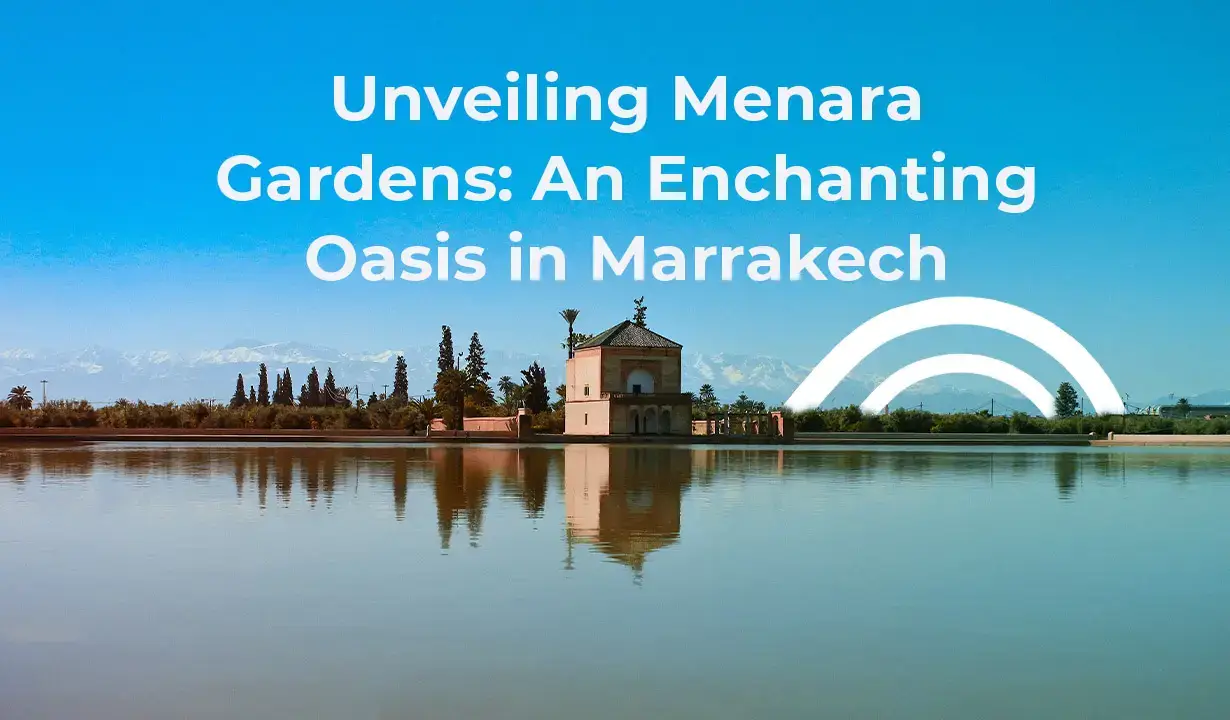
Menara Gardens is a serene escape amidst the hustle and bustle of Marrakesh. The gardens offer a beautiful natural setting with a rich history, and breathtaking views of the Atlas mountains.
It's a favorite haunt for both couples and families, especially during the evenings when the sun's setting light paints the place with golden and red hues, making it seem almost surreal.
The gardens have been attracting visitors for over nine centuries and are located close to the international airport. Thus, it's an ideal spot for tourists to visit before their journey home.
 Although the Menara Gardens were created as a hub of a complex irrigation system, it's mostly regarded as a picturesque spot for taking romantic photos.
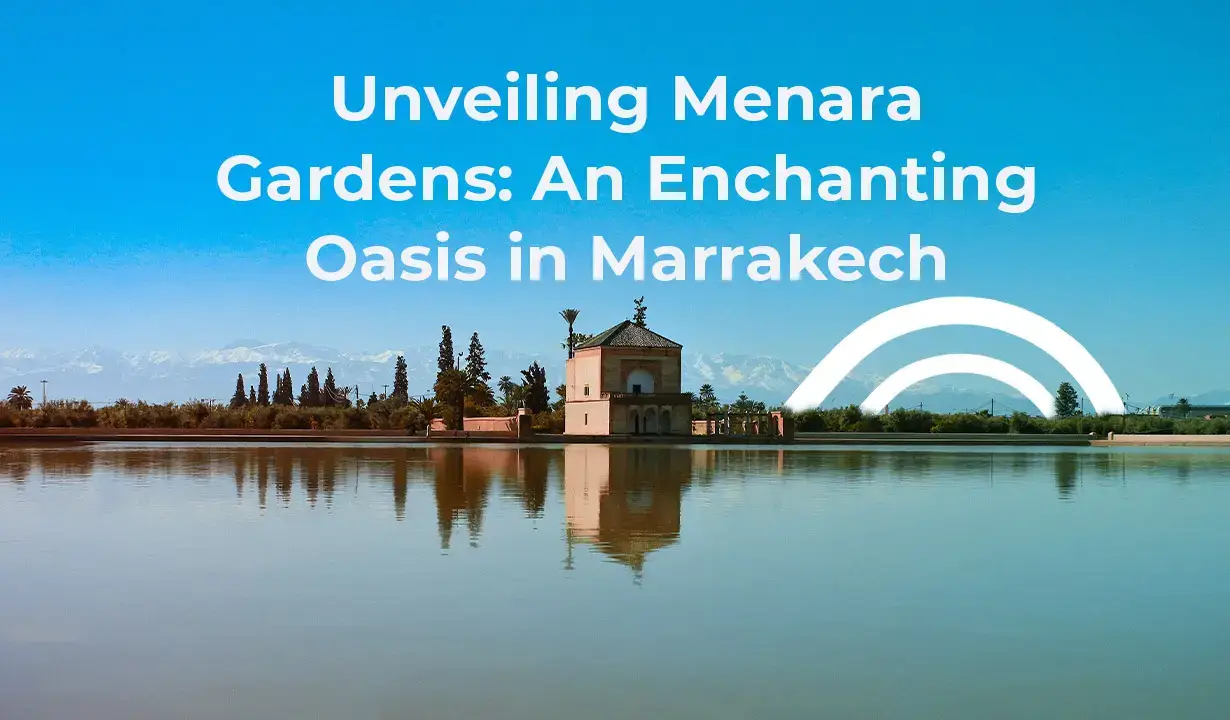
The pavilion beside the lake, known as the Pleasure Pavilion, has contributed to the garden's setting. It's said that several sultans chose this place for their secret romantic rendezvous, and visitors will understand why once they step inside this harmonious, two-story building. The ceilings, floors, and walls are decorated with muqarna motifs, carved wood, plasterwork, and mosaics.
Although the Menara Gardens were created as a hub of a complex irrigation system, it's mostly regarded as a picturesque spot for taking romantic photos.
The pavilion beside the lake, known as the Pleasure Pavilion, has contributed to the garden's setting. It's said that several sultans chose this place for their secret romantic rendezvous, and visitors will understand why once they step inside this harmonious, two-story building. The ceilings, floors, and walls are decorated with muqarna motifs, carved wood, plasterwork, and mosaics.
The Agricultural Origins of Menara Gardens
Menara Gardens have been a space to enjoy nature and recreation since the 18th century when many olive trees were planted. These olive trees, along with an artificial lake, have become the defining features of the garden. The lake has been a source of irrigation for agriculture since the 12th century, thanks to the Almohad period's infrastructure development. It's one of the most striking features of the garden, and the water for the lake comes from the Atlas mountains. The Menara Pavilion, built in the 16th century by Sultan Sidi Mohammed, is located beside the garden. It underwent significant restoration in 1869, where the building was crowned with a typical pyramid-shaped roof made of green tiles. The pavilion now resembles the tower of a fortress, and that's where the complex derives its name from as "menara" means "tower."Exploring the Menara Gardens
Menara Gardens are a vast olive plantation that covers over 100 hectares, featuring thousands of perfectly aligned olive trees. Amongst these trees, there are many other species of trees, shrubs, cypress, and palm trees that make up the green spaces of Marrakesh. Visitors should visit the garden early in the morning or in the evening, especially on hot days, as there's little shade available. Families and couples flock to the garden on weekends and pleasant days during the spring and autumn. They bring picnics prepared from the most popular ingredients in typical Moroccan cuisine like makooudas, pastelas, and khubz. The Menara lake, which measures 200x150 metres, is a sight to behold. It's supplied with millions of litres of water from the Atlas mountains via an intricate network of channels. The underground galleries that provide water to the lake and the olive trees span over 30 kilometres, starting outside Marrakesh. The lake also irrigates several hectares of other plants, including an area of vegetable plots.
Although the Menara Gardens were created as a hub of a complex irrigation system, it's mostly regarded as a picturesque spot for taking romantic photos.
The pavilion beside the lake, known as the Pleasure Pavilion, has contributed to the garden's setting. It's said that several sultans chose this place for their secret romantic rendezvous, and visitors will understand why once they step inside this harmonious, two-story building. The ceilings, floors, and walls are decorated with muqarna motifs, carved wood, plasterwork, and mosaics.