Food Etiquette in Morocco: Essential Rules to Follow
Morocco, a country renowned for its rich culinary heritage and warm hospitality, offers a dining experience unlike any other. Sharing a meal in Morocco is more than just eating; it’s a cultural ritual rooted in tradition and respect. Whether you’re dining with locals in a family home or savoring authentic Moroccan dishes at a restaurant, understanding the rules of food etiquette will help you make a positive impression and fully appreciate the experience.
In this article, we’ll explore the essential rules of food etiquette in Morocco, including practical tips to ensure you dine respectfully and comfortably.
Eat with Your Right Hand
One of the most fundamental rules of food etiquette in Morocco is to always eat with your right hand. In Moroccan culture, the right hand is considered clean and appropriate for eating, while the left hand is traditionally reserved for personal hygiene tasks and is considered unclean.
Why Is It Important?
This practice stems from Islamic traditions and is a cultural norm that holds strong significance in daily life. Whether you are tearing a piece of khobz (traditional Moroccan bread) or scooping up tagine, make sure to use your right hand.
How to Do It Right:
-
Practice Tearing Bread: Moroccan meals often involve using bread to scoop up food, so practice breaking and folding it with your right hand.
-
Avoid Using Utensils Unnecessarily: While some dishes are eaten with spoons, many traditional meals are enjoyed with your hands.
-
Left Hand Awareness: Even if you are left-handed, it is polite to make an effort to use your right hand when eating.
Respect Communal Eating Customs
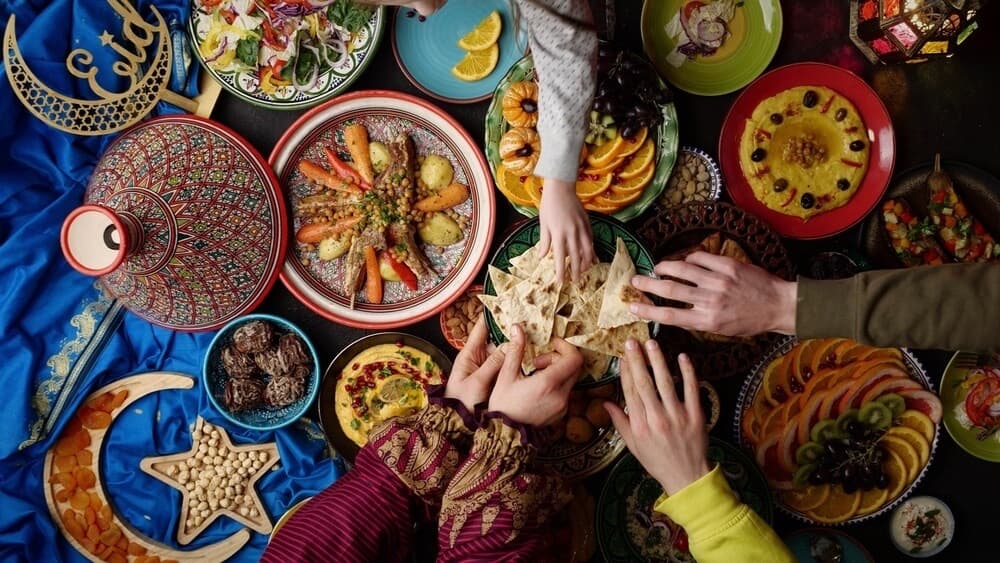
In Morocco, meals are often served from a communal dish, typically a large, beautifully crafted tagine or platter placed in the center of the table. Each person has their own section of the dish, and it’s considered polite to eat from your designated area only.
Tips for Communal Dining:
-
Stay in Your Zone: Imagine an invisible pie-shaped wedge in front of you and only eat from that area.
-
Use Bread as a Scoop: Instead of utensils, use a piece of bread to pick up your food.
-
Don’t Reach Across: Even if there’s a tempting piece of meat on the other side, don’t reach across someone else’s space.
-
Be Mindful of Portions: Take small portions at a time, as it shows consideration for others sharing the meal.
Serving the Guest First:
In Moroccan hospitality, guests are highly respected, and it is common for the host to offer the best pieces of meat or food to the guest first. Accepting this gesture graciously is considered polite, even if you feel shy or hesitant.
Say “Bismillah” Before Eating
In Morocco, it is customary to say “Bismillah” (meaning “In the name of God”) before starting a meal. This simple phrase signifies gratitude and respect. At the end of the meal, it is also common to say “Alhamdulillah” (meaning “Praise be to God”) to express thanks.
How to Show Respect:
-
Follow the Lead: If dining with locals, observe when they say the phrase and follow along.
-
Practice Saying It Yourself: Learning to say “Bismillah” before eating is a small but meaningful way to show cultural respect.
Accept Offers Graciously
Hospitality is a cornerstone of Moroccan culture. If your host offers more food, tea, or a special treat, it is polite to accept it graciously, even if you are already full. Refusing food too quickly may come across as impolite.
How to Handle Generosity:
-
Take a Small Portion: Even if you’re full, taking a little bit shows appreciation.
-
Compliment the Food: Express your enjoyment of the meal to show gratitude.
-
Be Respectful with Refusals: If you must decline, do so gently and politely.
Drinking Moroccan Tea with Etiquette
Mint tea, often referred to as “Moroccan whiskey,” is an essential part of Moroccan hospitality. It’s not just a drink but a social ritual.
-
Tea Pouring: Traditionally, tea is poured from a height to create a frothy top. Allow the host to pour the first glass.
-
Acceptance: Even if you’re not a tea drinker, it’s polite to take at least a small sip.
-
Compliment the Host: Acknowledge the taste and the presentation, as tea preparation is considered an art form.
Cleanliness and Hygiene
Before a meal, it’s customary to wash your hands, especially if eating with your hands. Often, a jug and basin are brought to the table for handwashing.
-
Handwashing Ritual: Participate willingly, as it shows your readiness for the meal.
-
Post-Meal Hygiene: Washing your hands afterward is also a common practice.
Dining Pace and Social Interaction
Meals in Morocco are as much about social interaction as they are about eating. Conversations, laughter, and storytelling are integral parts of the dining experience.
-
Take Your Time: Don’t rush through the meal. Enjoy the food and the company.
-
Engage with the Host: Compliment the food and show interest in the preparation or ingredients.
Final Tips for Dining Etiquette in Morocco
-
Dress Appropriately: Modest clothing is appreciated, especially when dining with families.
-
Avoid Waste: Take only what you can eat to show respect for the meal.
-
Thank Your Host: A simple “Shukran” (thank you) or “Barakallahou fik” (may God bless you) is a wonderful way to express gratitude.
Why Food Etiquette Matters in Morocco
Observing food etiquette in Morocco is not just about following rules—it’s about demonstrating respect and appreciation for the country’s rich cultural traditions. Whether you’re sharing a family meal or enjoying street food, knowing the customs will make your experience more authentic and enjoyable.
By respecting communal eating practices, eating with your right hand, and graciously accepting hospitality, you honor the traditions that make Moroccan dining so unique. In turn, locals will appreciate your effort to understand their way of life, leading to more positive and welcoming interactions.
Final Thoughts: Embrace Moroccan Hospitality
Dining in Morocco is more than just a meal—it’s a cultural experience filled with warmth, generosity, and tradition. By embracing food etiquette, you show your respect for Moroccan values and immerse yourself more deeply in the local way of life.
So the next time you find yourself seated around a communal dish, remember these simple yet essential rules, and savor the experience of Moroccan hospitality.