StayHere
Complete Guide to Visiting Dar El Bacha - Museum of Confluences

Complete Guide to Visiting Dar El Bacha - Museum of Confluences

Located in Marrakech, Dar El Bacha holds great significance for the city's residents, symbolizing its historical past and vibrant culture. This magnificent palace stands as a testament to Marrakech's

Complete Guide to Visiting Dar El Bacha - Museum of Confluences
Located in Marrakech, Dar El Bacha holds great significance for the city's residents, symbolizing its historical past and vibrant culture. This magnificent palace stands as a testament to Marrakech's former rulers and captivates visitors with a journey through time. Beyond its tourist appeal, Dar El Bacha houses art galleries and museums that showcase the unique culture and history of this captivating city. Dar El Bacha is a must-visit during your stay in Marrakech, and this article will provide you with the necessary information to prepare for your visit.
The History of Dar El Bacha

Literally translating to "the pasha's house," Dar El Bacha in Marrakech was constructed in 1910 and served as the residence of Thami El Glaoui, who was appointed as the pasha of Marrakech by Sultan Moulay Youssef in 1912. For many years, he held significant political influence in southern Morocco under French colonial rule. Thami El Glaoui designed this splendid palace to impress his guests and reflect his power. In addition to its political importance, Dar El Bacha was also a major cultural and artistic center. Numerous famous guests passed through its doors, including writers, musicians, and renowned artists, contributing to the emergence of a dynamic cultural environment. Personalities such as Colette, Maurice Ravel, Charlie Chaplin, and Joséphine Baker were among those captivated by the charm of Dar El Bacha and who contributed to its fame. The National Museum Foundation (FNM) of Morocco has restored a portion of the palace, which was subsequently transformed into a museum known as Dar El Bacha - Museum of Confluences.

Who Was Pasha Thami El Glaoui?

Thami El Mezouari El Glaoui, born in 1879 in Telouet, is one of the most famous Moroccan pashas. Sometimes nicknamed "The Black Panther" or "The Lord of Telouet," he played a major role in Moroccan history. His surname, El Mezouari, has its roots in a title granted to one of his ancestors by Ismaïl ben Chérif in 1700. As for "El Glaoui," it refers to the leadership of the Glaoua tribe, a Berber tribe residing in the kasbah of Telouet in the High Atlas and Marrakech. Thami El Glaoui succeeded to lead the Glaoua after the death of his elder brother, El Madani. As an ally of the French protectorate in Morocco, he worked towards the overthrow of Sultan Mohammed V. From a young age, Thami El Glaoui stood out for his exceptional military skills and political acumen. He forged strategic alliances with other tribal leaders and engaged in armed conflicts, thus consolidating his power and reputation. His growing influence caught the attention of Sultan Moulay Youssef, who bestowed upon him the title of Pasha of Marrakech in 1912. As Pasha, Thami El Glaoui wielded considerable authority over the Marrakech region. He ruled with a firm hand and positioned himself as a key player in the Moroccan political landscape. His reign was marked by significant political decisions, including forging close ties with the French colonial authorities during the protectorate period. This strategic alliance bolstered his position and allowed him to expand his influence not only in Marrakech but also in other southern Moroccan regions. Socially, Thami El Glaoui left a lasting impact on Marrakech. He invested in infrastructure, restoration, and urban development projects, contributing to the modernization of the city and improving the quality of life for its residents. His residence, Dar El Bacha, was a symbol of his power and prestige, attracting eminent personalities of the time and contributing to the cultural flourishing of the region. However, Thami El Glaoui's impact on Marrakech and Morocco remains a subject of controversy. Some view him as an opportunist who took advantage of colonization for his own interests, while others see him as a shrewd politician who navigated a complex political landscape.

The Architecture of Dar El Bacha

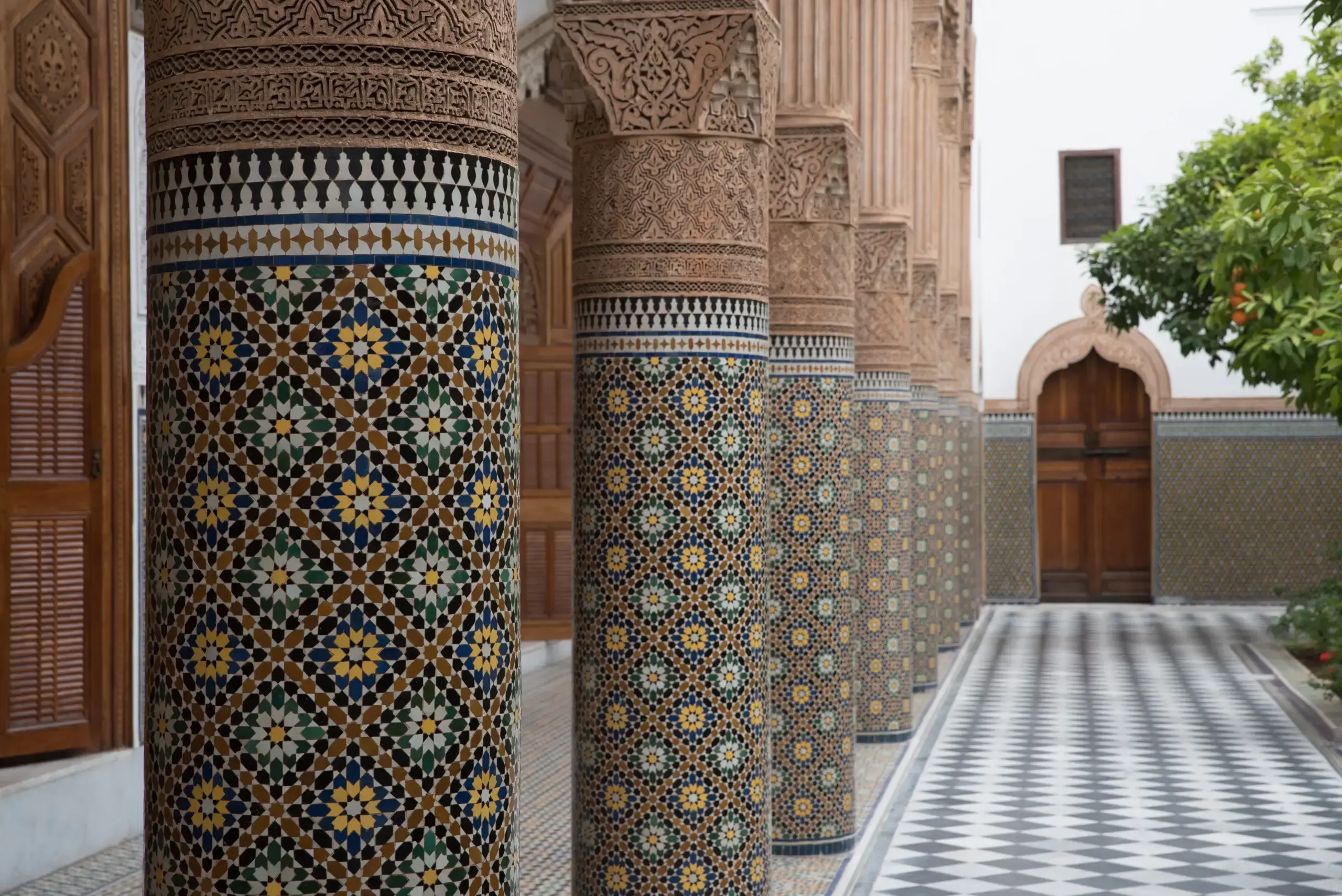
The architecture of Dar El Bacha is truly unique in its character. The palace consists of a series of interconnected buildings with inner courtyards and gardens. The walls are beautifully adorned with intricate mosaics and colorful tiles, giving the palace a vibrant and captivating appearance. The domes and minarets further add to the grandeur of the whole. Additionally, the balconies and terraces scattered throughout the palace offer striking panoramas of the surrounding city. Dar El Bacha's palace embodies the classic architecture of a riad, characterized by a central garden surrounded by six rooms on all four sides. The layout of the riad is symmetrical, particularly concerning the axes of the central naves. Thus, Dar El Bacha includes several annexes such as a traditional hammam, a douiria reserved for the palace's servants, a library, and a private space called the "harem," reserved for the Pasha's family. The entire residence is adorned with delicate and refined decoration. The zelliges (geometric mosaic tiles) and intricately carved wooden ceilings testify to the complexity and sophistication of typically Moroccan decorative patterns. Furthermore, the water supply, drainage, and heating systems of the hammam showcase the ingenuity of Moroccan craftsmanship. These architectural styles hold significant cultural importance as they reflect Moroccan identity and its rich cultural heritage. They are a living testament to the time when Spain and Morocco were closely connected politically and culturally. They also represent the influence of Islamic architecture in the region and underscore Morocco's attachment to its traditions and religion.

Practical Information Before Visiting Dar El Bacha

Before heading to Dar El Bacha, it is recommended to allocate enough time for exploration. The architectural richness and artistic details are worth savoring at a leisurely pace. Plan to spend at least a few hours immersing yourself in this unique experience. For a better understanding of the history and architectural details, it may be wise to hire a guide during your visit. An experienced guide can provide you with contextual information, interesting anecdotes, and lead you through the various palace buildings and courtyards. This will enrich your experience by uncovering the aspects and stories hidden behind the walls. Furthermore, it is advisable to bring water and wear comfortable shoes, as the tour may involve walking and exploring extensive spaces. The terraces and balconies also offer panoramic views, so don't forget your camera to capture these magical moments.

How to Get to Dar El Bacha?

The Dar El Bacha Museum is conveniently located in the heart of the Marrakech medina. It is easily accessible on foot from the famous Jemaa el-Fna square, just about a 15-minute walk away. Moreover, for those who prefer public transportation, the central bus station and the Bab Doukkala bus stop are also nearby and easily reachable on foot.

When to Visit Dar El Bacha?

If you're planning a visit to Dar El Bacha, it's wise to choose the right time to make the most of your experience. The best times to visit are generally during the non-peak tourist seasons. The months of March to May and September to November offer pleasant temperatures and relatively moderate crowds, allowing you to enjoy the palace with more tranquility. It's also recommended to avoid the summer months, especially July and August, as they can be very hot in Marrakech and attract a high influx of tourists. As for opening hours, Dar El Bacha is typically open from Wednesday to Monday, closed on Tuesdays, from 10 am to 6 pm. It's important to note that Fridays are special days when museum entry is free for Moroccans. Therefore, the gallery might be busier on that day. If you prefer to avoid crowds, it may be wise to plan your visit on a different day of the week.

Admission Fees for Dar El Bacha - Museum of Confluences

The entrance fee to access Dar El Bacha - Museum of Confluences is 60 dirhams (approximately 6 dollars) for foreign visitors, while nationals benefit from a reduced rate of 30 dirhams. However, please note that entry remains free for all children and students, regardless of their status. On Fridays, a special day, entry is free for nationals as well as foreign residents in Morocco. If you prefer a guided tour, please be aware that these are conducted by appointment. It's recommended to contact the museum in advance to arrange your visit with a guide who can provide in-depth information about the history and architecture of the palace.

Café Dar El Bacha

If you seek a unique coffee experience in Marrakech, Café Dar El Bacha is the ideal place. Nestled in the heart of the city, this picturesque café offers a captivating ambiance and an unforgettable getaway. Its central location makes it a popular meeting place where you can mingle with locals and travelers, thus discovering the cultural diversity that characterizes Marrakech. Café Dar El Bacha in Marrakech stands out from other cafes in the city due to its constant quest for quality. Particular attention is paid to selecting coffee beans from the finest local suppliers. The baristas working at the café are passionate about the art of coffee and strive to ensure that every cup served is perfect. They employ traditional brewing techniques, ensuring that each cup of coffee is as flavorful and aromatic as possible. The café's menu offers a variety of coffee-based drinks, ranging from espresso to cappuccino, latte, and mocha, to name just a few examples. The café also offers unique specialty beverages, such as "Fes," which is a blend of traditional Moroccan tea and coffee, as well as "Kif," a popular spiced coffee drink in the region.

Conclusion

Dar El Bacha is an iconic monument in the city of Marrakech. It has stood for centuries as a symbol of the city's rich history and culture. It holds significant importance for Marrakech's residents and is also a popular tourist destination. Dar El Bacha is truly a sight to behold. To enjoy an immersive experience in this vibrant city, consider visiting its traditional souks, majestic palaces like the Bahia Palace, or lush gardens like the Majorelle Gardens. By combining these different experiences, you'll have the opportunity to fully immerse yourself in Moroccan culture and create unforgettable memories.

ready to stay?

12 locations in Casablanca, Rabat and Agadir.

Book now